The morning after my arrival in Madrid, I woke up at 2:30 AM, wide awake. Since I’d set my alarm for 4:00 AM to catch a 5:00 AM shuttle back to the airport, I simply got up. When I picked up my phone to check the time, I scanned my usual apps. Chuckled over the responses to yesterday’s post about my arrival problems in Madrid, sorted emails to see if there was anything urgent about the Camino that I needed to respond to, checked Facebook messenger to see if any new pictures of our youngest grandson had been posted in our family’s Baby Milo thread.
That’s when I noticed a ton of notifications in WhatsApp from Michaela.
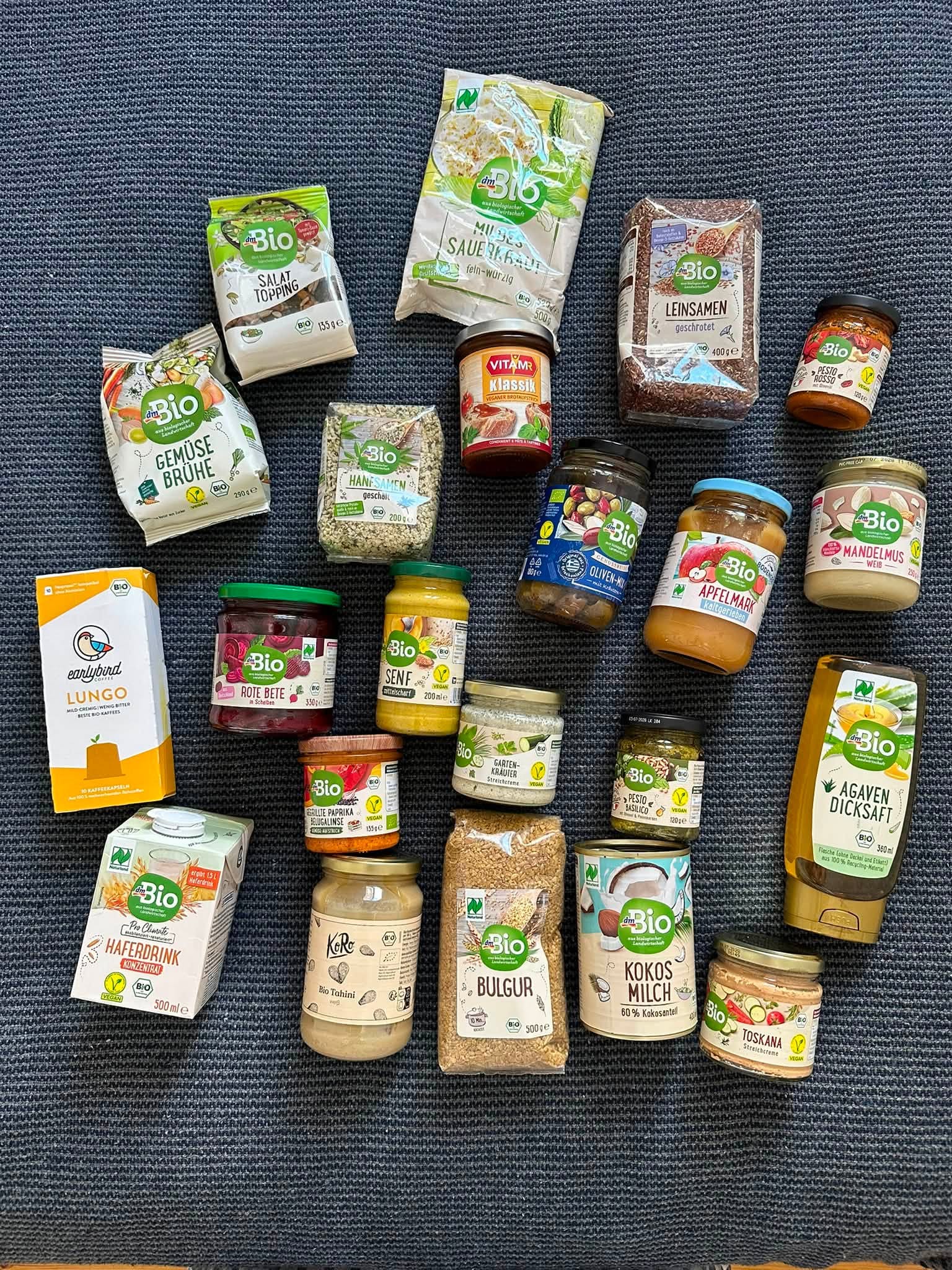
Apparently, she arrived in Berlin by train yesterday as planned, settled into our Airbnb (her first text mentioned how lovely the apartment was!) And while I was flying from Madrid to Berlin, she went out shopping in our new neighborhood and bought us a couple of bags of groceries. We have a kitchen at our Airbnb and neither of us likes to eat our meals out all the time. We both have specific health-related requirements for what we eat. I figure if I can eat oatmeal the way I like it in the morning, my body can handle more flexibility the rest of the day. She’d laid in provisions for us. What a good friend!
Our plan was that Michaela would meet me at the Berlin airport this morning when I arrived, and together, we’d wrestle all my STUFF onto public transit to our new home for the week.
In the lead up to this trip, I hadn’t given much thought to my time in Berlin because I was focused on prepping for the Camino. On a Zoom call last week, Michaela and I agreed that we’d take things one day at a time as we went along.
I was relieved that I wouldn’t need to figure things out on my own. Michaela was born and raised in Germany; I’d be with a native speaker. I could lean into her language abilities, her knowledge of the city, the culture, the country. That would make things easy and easy was what I wanted the week before leading an international pilgrimage.
But as I read through her dozen WhatsApp messages, it became clear that things were NOT going according to plan.
Michaela had fallen while carrying groceries into our apartment, she’d broken her hip, and was now in the hospital on oxycodone awaiting surgery. Our weeklong reunion in Berlin was suddenly looking very different.
As my friend Matt wrote to me, “The Universe has its own plans.”
Suddenly I was faced with the reality that I’d be spending my week in Berlin navigating on my own, doing some sightseeing, eating my meals alone, traveling back and forth to the hospital every day.
Of course, I felt terrible for Michaela. I got to speak to her before she went into surgery. She was positive and upbeat; I’m sure the drugs were helping. She told me how to access the lockbox that held the keys to our apartment. I wished her well and said I’d visit after her surgery.
As I went through security before my Iberia flight to Berlin, I began shifting my mindset. Nimbleness is an essential travel—and life—skill. “I am going to be doing this alone.” I breathed that reality into my belly and boarded the plane.
The flight was uneventful. I successfully managed my arrival on my own. I was able to find the lock box and access the apartment. It is truly lovely!
Now it’s the next morning.
The hard part for me during my first day in Berlin (aside from missing my friend and waiting for word about her surgery) was figuring everything out on my own: how to buy a transit pass and which pass to buy. How to order in a restaurant when everything on the menu was in German. (Yes—Google translate helps, but only to a limited and humorous degree.) How to map where I was going and manage public transit routes. I got off at the wrong stop once and walked in the wrong direction twice.
But eventually, once she gave me the green light to visit, I found my way to the hospital where Michaela had her surgery, and it only took me half an hour of wandering around before I found someone who spoke English who could guide me to her room. By the time I finally found her, smiling up at me from her post-surgery bed, I felt proud of everything I’d figured out. Her surgery had been successful and she was doing well. I was able to bring her her glasses and her contact lenses and the essential things she needed.
Once I got back to our apartment, I settled and slept all night on European time. My body clock was being reset.
When I got up this morning there were certain basic things I wanted to accomplish—like making my morning oatmeal (thank you Michaela for the groceries!) and a cup of coffee with a little coffee pod. Doing a load of laundry.
But every appliance in the Airbnb, from the coffee maker to the smooth convection stovetop to the washing machine—completely confounded me. They looked nothing like the machines back home. It’s humbling not to be able to figure out how to do the daily tasks we completely take for granted.
So—Claude to the rescue!
Despite my misgivings about his hit or miss, often erroneous travel advice, I brought Claude into the picture to help me manage things. At least that way, I had someone to converse with. Now I understand why lonely people get hooked on relationships with their AI. They’re programmed to make us feel good about ourselves and our ideas. But for me, the bottom line wasn’t loneliness; I needed help and Claude was available.
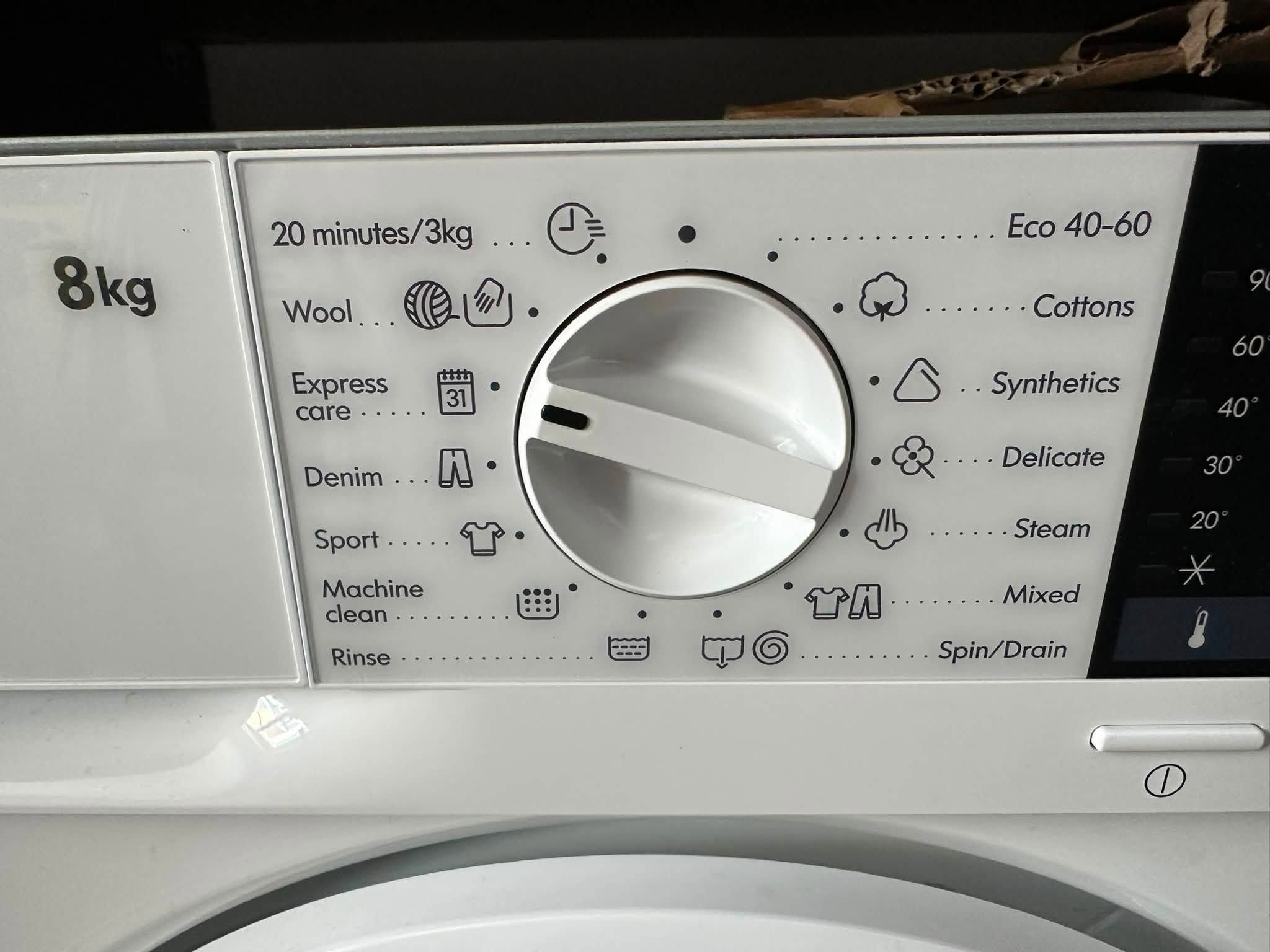
Have you ever tried to use a European washing machine? The controls are completely different than what I’m used to back home.
Here’s how our conversation went:
Decoding a European Washing Machine
A Berlin laundry conversation
Me:
I’m in Berlin staring at a European washing machine and I want to do some laundry. I don’t know how to use this machine. Everything about its dials is unfamiliar to me. Can you help?
Claude:
European washing machines can be genuinely baffling — different symbols, temperature in Celsius, and cycle names that don’t map to what you’re used to. Let me help you decode it.
A few things that are usually true across European machines (Bosch, Siemens, Miele, AEG, Bauknecht are common brands):
The dial layout: Usually one big rotary dial for the program/cycle, plus buttons for temperature, spin speed, and options (extra rinse, delay start, etc.). The dial often has a series of pictograms rather than words.
Common symbols to look for:
– A shirt in a tub = Cottons/normal
– A shirt with a wavy line = Synthetics/easy-care
– A delicate flower or hand in water = Delicates/hand wash
– A curved arrow or circle = Spin only
– Numbers like 30, 40, 60, 90 = temperature in °C (not minutes)
– A snowflake or “0” = cold wash
Buttons to check separately:
– Temperature button (may say “Temp” or show a thermometer) — sets °C independent of the dial
– Spin speed (rpm, often 400–1400) — lower for delicates, higher for cottons
– Start/Pause button — machine often won’t start until you press this after selecting settings, and the door usually locks automatically
If you can tell me what’s actually printed or pictured on the dial (even a rough description of the symbols and any text, in German or otherwise), I can help you figure out exactly which setting to use for whatever you’re washing. Or if you can snap a photo, I can take a look at that too.
Me:
the dial says 20 minutes/3kg, wool, express care, denim, sport, machine clean, rinse, Eco 40-60, cottons, synthetics, delicate, steam, mixed, spin/drain.
then besides that there’s a column of temperatures (I think) 90, 60, 40, 30, 30, 20 and a start and some swirl that says off and something under it I don’t recognize and a spiral under that whole row.
there’s something that looks like a W and something that’s an icon for water. and one with a tee shirt on it.
Claude:
That matches a fairly standard Bosch/Siemens-style dial — you’ve basically got two separate controls: a program dial (the list you read out) and a temperature ring or dial (the 90/60/40/40/30/20 numbers), plus a few option buttons off to the side.
Here’s how the pieces likely fit together:
The program dial — this picks the type of wash:
– Cottons = your default for towels, sheets, everyday clothes (durable fabric)
– Synthetics = activewear, polyester blends, most “wrinkle-prone” clothes
– Delicate = thin or loosely woven items
– Wool = wool specifically, gentle tumbling
– Mixed = a load with a mix of fabric types, lower risk setting
– Eco 40-60 = energy-efficient cycle, often the EU-mandated “default” — takes longer but uses less power/water, works for cottons/synthetics mixed at that temp range
– Express/Quick Care, 20 min/3kg = fast, small, lightly soiled loads
– Denim, Sport = built for those specific fabrics
– Rinse, Spin/Drain, Machine Clean = utility cycles, not for regular laundry (Machine Clean is an empty-machine self-clean cycle)
The temperature ring (90/60/40/40/30/20 + off) — you turn or select this in addition to the program, to set how hot the water is. Cottons often default to 40 or 60; delicates/wool to 30 or cold. The “off” swirl is just the machine’s power-off/reset position. The unlabeled symbol below it and the spiral below that are very likely the spin speed dial (a swirl/spiral is the universal spin icon in EU appliances) — lower numbers or fewer swirls on it mean gentler spin, good for delicates.
The extra icons (W, water droplet, tee-shirt):
– Water droplet = likely extra rinse
– Tee-shirt = likely easy iron / reduced creasing (slower spin-down to reduce wrinkles)
– “W” is trickier without seeing it — possibly pre-wash, or it’s part of a logo/brand mark rather than a function. If you can tell me the brand (usually printed somewhere on the front, like Bosch, Siemens, AEG, Miele, Bauknecht), I can pin that one down exactly.
To get you an actual setting recommendation: what are you washing — regular clothes, something delicate, or towels/sheets? That’ll tell me which program + temp combo to point you to.
Me:
It’s a few items….including a couple of more delicate things. underwear, a bra, a shirt, pajamas. I was going to do handwashing, so it’s really not much.
Claude:
For that load — small mix of delicates, underwear, a bra, pajamas — here’s what I’d pick:
Program: Delicate (not Cottons, not Synthetics). It’s designed for exactly this — low agitation, gentler tumbling, won’t stress out elastic or thin fabric.
Temperature: 30 (the lower end, not 20/cold unless things are lightly worn). 30°C is a good default for delicates — cool enough to protect elastic and colors, warm enough to actually clean.
Spin: low, if you have separate control over it. Delicates typically default to a low spin automatically, but if there’s a separate spin dial, pick something in the 400–600 rpm range rather than the max. High spin is harder on bra elastic and delicate seams.
On the bra specifically: if it has an underwire, hook the clasp closed before washing (prevents it from snagging other items) — a mesh laundry bag is ideal if you happen to have one, but it’s not essential for one wash.
Since it’s a small load: the “20 min/3kg” quick program could also work if everything is only lightly worn and you just want a quick refresh — but given you’re washing underwear, I’d lean toward the full Delicate cycle for a proper clean rather than the express one.
So: dial to Delicate, temp to 30, hit Start. That should cover it.
Me:
where do I put in the soap and how much?
Claude:
There should be a pull-out drawer near the top of the machine, usually with a handle or a slight lip you can grab — it’s separate from where the clothes go. Pull it all the way out; it typically has 2-3 compartments.
The compartments (usually marked with symbols or Roman numerals):
– I (or a numeral 1) = pre-wash — leave this empty, you’re not using a pre-wash cycle
– II (or a flower/star symbol) = main wash — this is where your detergent goes
– A compartment with a flower icon or marked with a * = fabric softener, if you’re using any (goes in near the end of the cycle automatically)
How much detergent: Since it’s a small load with delicates, use less than the standard scoop line — most detergent caps/scoops are calibrated for a full 4-5kg load, so for your handful of items, about half the recommended amount is plenty. Too much soap on a small load just means residue that doesn’t rinse out fully, which can bother sensitive skin (relevant with underwear against skin).
If you’re using liquid detergent, pour it directly into the main wash compartment (II). If it’s powder, same spot. Pods/tablets are the one exception — those go directly into the drum with the clothes, not the drawer.
Close the drawer gently after, then hit Start.
Me:
The detergent I found is powedered. Denk mit Vollwaschmittel
Claude:
Good to know — that’s a German heavy-duty powder detergent (“Voll” = full/all-purpose), and it’s worth flagging one thing: Vollwaschmittel is formulated for whites and light colors — it typically contains bleaching agents/optical brighteners to keep whites bright. It’s not ideal for dark or colored delicates, since repeated washes can gradually fade colors.
So:
– If your items are white or very light-colored, Denk mit Vollwaschmittel is exactly right, no issue.
– If anything is dark or colored (a black bra, colored pajamas, etc.), it’ll still get clean, but if you want to protect the color long-term, a Colorwaschmittel or Feinwaschmittel (for delicates) would be gentler. For a single wash it won’t ruin anything — it’s more of a “repeated washes over months” fading issue.
Since it’s just this one load and you’re not near a store, I wouldn’t stress about it — use what you have. Dosage-wise, the same advice holds: about half the normal scoop for your small load, into compartment II (main wash).
Me:
there’s sensitiv weichspuler mandelmilch also
Claude:
That’s fabric softener (Weichspüler) — “Sensitiv” and almond milk scent suggests it’s a gentle formula for sensitive skin, which is a nice match for underwear against skin.
A couple of notes on using it:
Where it goes: the compartment marked with a flower symbol (sometimes marked ✿ or “III”) — not the same one as your powder detergent. The machine draws it in automatically partway through the rinse cycle, so you can add it now and it’ll wait until the right moment.
How much: check the cap — most European softener caps have fill lines (often marked for different water hardness levels), but as a rule of thumb, fill to the lowest line for a small load like yours.
One thing worth knowing: fabric softener isn’t great for very stretchy/elastic items (like your bra) since it can coat and break down elastic fibers over time, and it’s also often skipped on moisture-wicking synthetic sportswear since it reduces absorbency. For a one-off wash it’s not a big deal, but if you’re doing this regularly, you might skip the softener on the bra specifically and just use it on the shirt/pajamas.
Since it’s one small mixed load, I wouldn’t overthink it — a small amount in the softener compartment is fine.
Me:
there’s also tandil color colorwaschmittel 20-60 degrees C
Claude:
That actually solves the color question from a couple messages ago — use the Tandil Colorwaschmittel instead of the Vollwaschmittel for this load.
Since your items are a mix (underwear, bra, shirt, pajamas — likely not all white), Colorwaschmittel is the better match: it’s formulated without the bleaching/brightening agents that Vollwaschmittel has, so it protects color and won’t cause fading over time. And it’s rated for 20-60°C, so it works fine at the 30°C you’re already set to.
So, final setup:
– Detergent: Tandil Colorwaschmittel, about half the recommended scoop, into compartment II (main wash)
– Softener: Sensitiv Mandelmilch, small amount, into the flower-marked compartment (skip it on the bra if you want to protect the elastic, but fine on everything else)
– Program: Delicate, 30°C, low spin
– Hit Start
That should be a clean, gentle wash for the whole load.
Okay, the conversation goes on and on, but I won’t bore you with it. Claude taught me how to measure the detergent, where to put it, how to turn on the machine and start the cycle and set the proper rate of spin.
This is how our conversation ended:
Me:
okay, it’s running! Now I have to see if there’s a clothesline somewhere to hang up these clothes once they’re washed!
Claude:
Nice, glad it’s finally spinning! 51 minutes should give you a bit of time to go scout for a clothesline or drying rack around wherever you’re staying — good luck with the search.
Me:
thanks for your help. I NEVER would have figured that out myself.
Claude:
You got through it though — powered it on, decoded the icons, picked the right detergent and settings, all with an unfamiliar panel in another language. That’s not nothing. Enjoy the rest of your time in Berlin!
An hour later, the cycle was over. I found a drying rack in a closet and set it out on the porch. There were even clothespins. And Voila! Clean clothes.
Now, I just have to figure out how to cook my oatmeal.
P.S. On my way out to find a self-guided tour of the Wall between the former East Berlin and West Berlin, it took me ten minutes to figure out how to get the keys out of the front door lock.
Humor is definitely required!